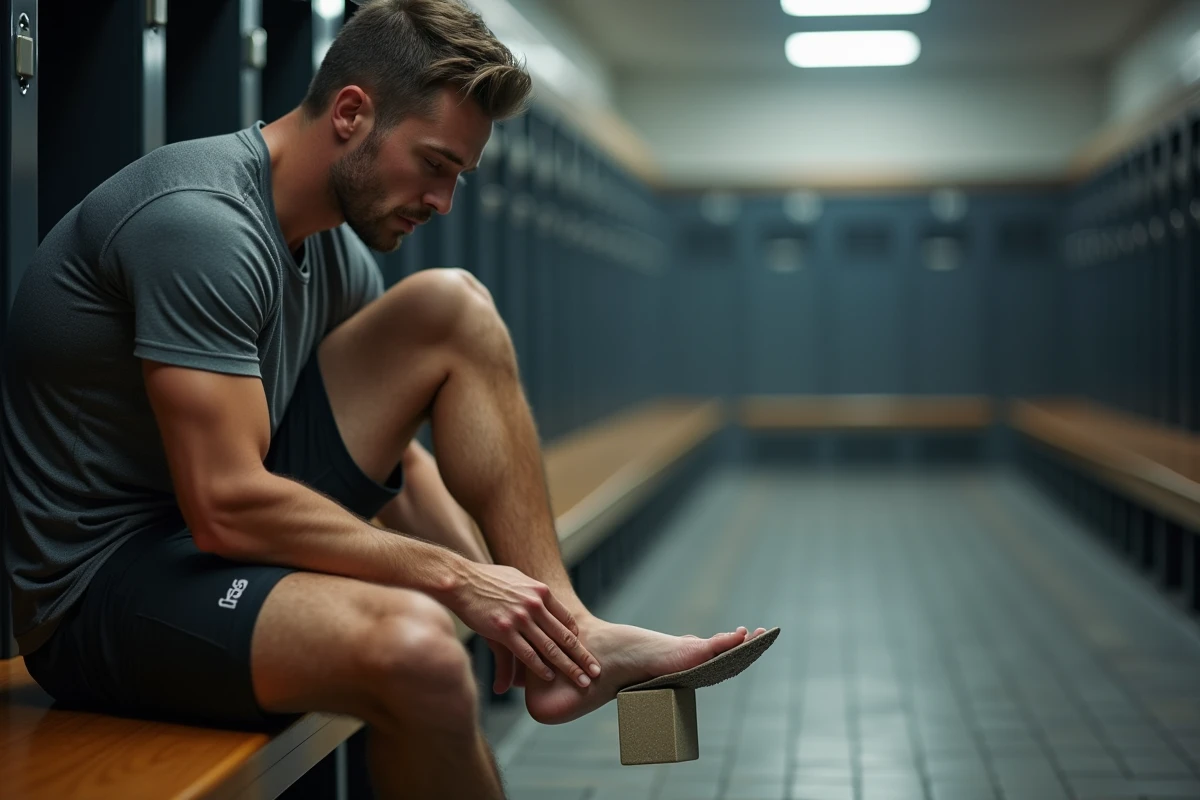
Have you ever noticed that thick, yellowish layer under your feet after a few weeks of intense training? This callus, referred to as hyperkeratosis by professionals, is not a hygiene issue. It is your skin’s response to repeated friction, prolonged pressure, and the mechanical stresses inherent in sports.
The usual reflex is to sand or file it down when the discomfort becomes too strong, then to resume as if nothing happened. This reactive approach works poorly for regular athletes because the callus returns faster than it goes away. The real solution involves an integrated maintenance cycle within the training plan, aligned with the phases of the season.
Callus maintenance cycle: before, during, and after the sports season
Rather than treating the callus as a one-time problem, the protocols used in ultra-endurance and indoor sports propose a three-phase management approach. The idea is simple: support the natural formation of calluses so that they protect the foot without ever becoming a source of pain or cracking.
Before the season, prepare the skin with gradual tanning. This principle, documented among runners trained in ultra-trail, involves exposing the feet to controlled friction over several months. Alternating hydration phases with light drying phases helps develop a soft callus capable of absorbing shocks without cracking. Removing all the callus just before a competition is a common mistake: the new skin underneath has no resistance to the stresses of running.
During the season, care is limited to regular maintenance without excess. A gentle weekly scrub is sufficient to keep the thickness under control. Additionally, it is useful to learn more on J’améliore ma Santé to adapt the routine to your discipline.
After the season, it’s time for in-depth care. Prolonged foot baths, more vigorous exfoliation, and daily hydration with a urea-based cream: this skin recovery phase prepares the ground for the next cycle.

Shoes, socks, and insoles: the anti-friction triangle
The callus does not form randomly. It appears in areas where friction is highest: under the sole, on the toes, at the heel. And the primary factor of friction is the equipment.
You may be wearing shoes that are slightly too big or too tight. A half-size difference is enough to create repeated slipping that thickens the skin in a few weeks. High-level teams now work with a collaboration between podiatrists, physical trainers, and equipment manufacturers to simultaneously adjust training load, type of insoles, and sock materials.
Here are the checkpoints to keep in mind:
- The shoe should leave about an inch of space in front of the longest toe, without the foot sliding laterally during direction changes
- Synthetic fiber socks wick moisture better than cotton, reducing maceration and thus friction – a wet foot rubs more than a dry foot
- Orthopedic insoles or silicone pads redistribute pressure and relieve areas where callus accumulates, particularly under the metatarsal heads
- Regularly changing pairs of shoes allows for varying pressure areas and prevents a single pressure point from bearing all the stress
A dry and well-supported foot develops fewer pathological calluses than a wet foot jostled in an ill-fitting shoe. This observation may seem basic, but it explains the majority of excessive callus cases among amateur athletes.
Annual podiatric assessment: spotting callus before it becomes a problem
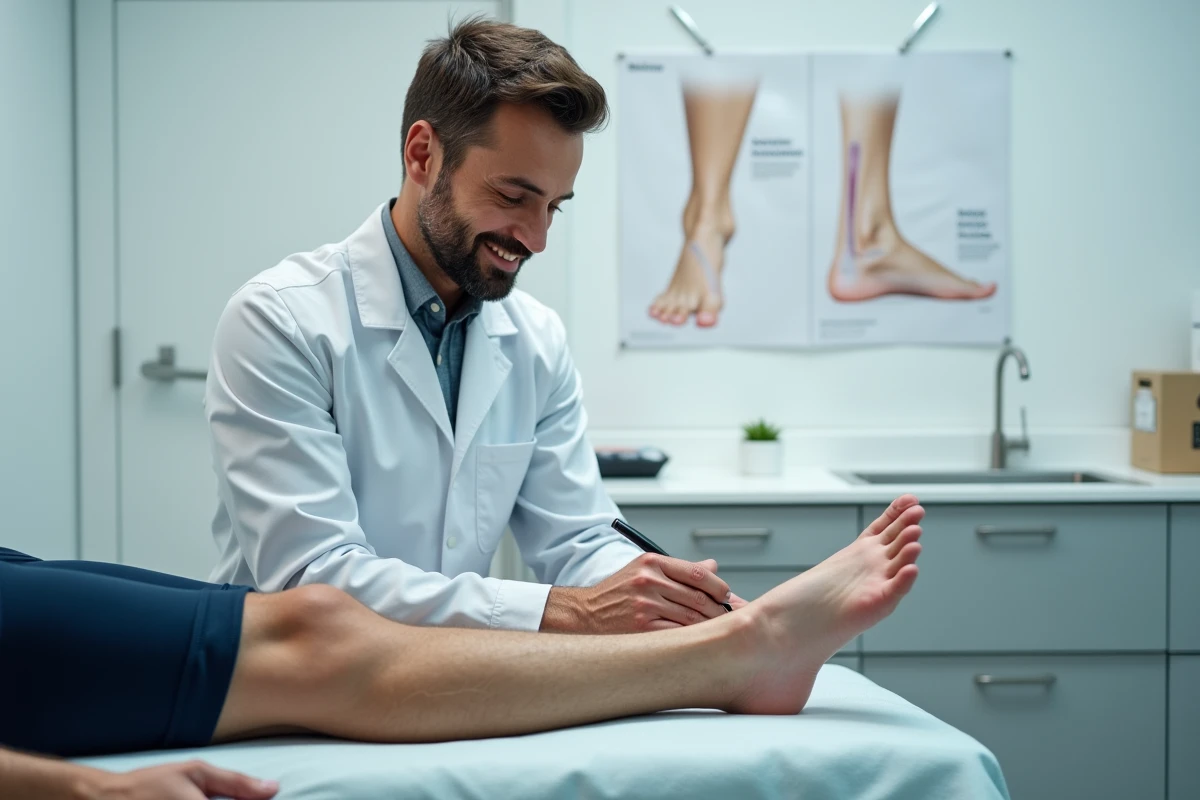
Recent recommendations in sports medicine emphasize the early detection of plantar hyperkeratosis during the annual podiatric assessment of runners. The goal is to identify a callus that is evolving poorly before it transforms into a fissure, ulceration, or infection.
This assessment is not only for high-level athletes. A runner who accumulates three to four outings per week subjects their feet to comparable stresses. The podiatrist evaluates the thickness and flexibility of the callus, identifies areas of excessive pressure, and proposes targeted corrections.
Have you ever noticed a crack in your heel that takes weeks to heal? This is exactly the type of signal that the assessment allows you to anticipate. A deep fissure can require a training break of several weeks, while regular maintenance would have been sufficient to prevent it.
Concrete care routine compatible with training
Integrating foot care into your sports routine does not take much time. A few simple gestures are enough, provided you practice them regularly rather than intensively once a month.
After each session
Wash your feet with warm water, drying well between the toes. Apply a moisturizing cream if the skin feels tight. This gesture takes less than two minutes and limits peeling.
Once a week
A foot bath of ten to fifteen minutes in warm water softens the superficial layer. A light pass with a pumice stone or soft file removes excess without damaging the protective layer. Finish with a urea-based cream to maintain skin flexibility.
Every three to four months
Check in with a podiatrist or pedicure-podiatrist. This appointment allows you to adapt the routine to changes in training load and ensure that no area becomes problematic.
- Never cut the callus with a sharp instrument (cutter, razor blade): the risk of infection is real, and regrowth will be more aggressive
- Avoid chemical callus removers without medical advice, as they can damage the healthy skin around the callosity
- Report any persistent redness, sharp pain, or oozing to a doctor before resuming weight training or running
Callus on the feet is part of an athlete’s life. Trying to eliminate it entirely is as futile as it is counterproductive, as it protects the skin from friction. The goal is a thin, flexible, and even callus, maintained like one cares for their equipment: with small touches throughout the season, without waiting for pain to decide for you.