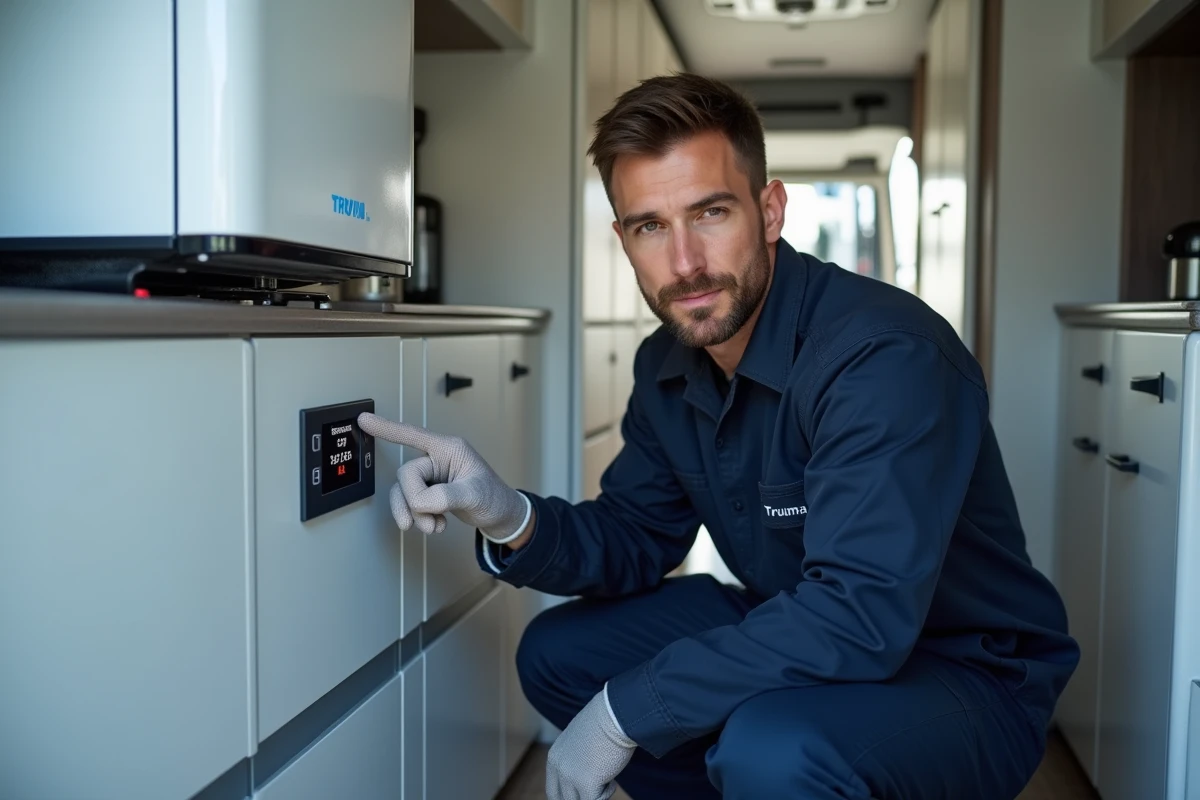
An error code Truma displayed on the CP Plus or iNet X panel is not read as a simple fault number. The Truma nomenclature distinguishes two families of codes by their prefix: W codes (warning), which indicate a malfunction that can be reset by the user, and E codes (error), which lock the device and require qualified intervention. Confusing the two leads either to an unnecessary customer service call or to a dangerous manipulation on a gas circuit.
W prefix and E prefix: two levels of severity in Truma error codes
The distinction between W and E is not cosmetic. W codes correspond to temporary anomalies: occasional flame loss, momentary battery undervoltage, slight overheating. In these cases, a reset from the panel is usually sufficient to restart the heating.
E codes, on the other hand, trigger a safety lock. The Combi or VarioHeat refuses to restart until a qualified technician has validated the re-commissioning. Since the update of Truma’s instructions to comply with EN 1949 and EN 624 standards, codes classified as “safety relevant” can no longer be unlocked by the user.
Attempting a forced reset on an E code exposes one to a loss of warranty and a real risk on the gas circuit.
To quickly find the meaning of each prefix according to your model, the list of Truma error codes details the correspondence between number, probable cause, and authorized action.
Frequent codes on Truma Combi and VarioHeat: specific technical causes

In our workshop, we observe that the majority of calls concern a handful of recurring codes. Three deserve a thorough analysis because they are often misinterpreted.
W517H: gas supply interrupted
This code appears when the burner is not receiving gas. The most obvious cause, an empty bottle or a closed valve, can be checked in a few seconds. However, if the W517H reappears after replacing the bottle, the problem lies upstream: a faulty pressure regulator, a punctured hose, or a clogged gas filter.
We recommend testing the pressure at the regulator before suspecting the device itself. A regulator that delivers a pressure lower than the nominal value will systematically trigger this code at cold start.
W255H: unstable power supply
The W255H indicates an out-of-range power supply voltage. On a Combi powered by 12 V, a battery voltage below the minimum threshold prevents ignition. The fuses, the wiring between the battery and the control panel, and the wire gauge are the three points to check in that order.
A fuse that repeatedly blows indicates a short circuit on the Combi’s power line, not just a simple battery fault.
E133H: combustion air motor short circuit
E code, therefore a lockout. The combustion air fan motor is short-circuited or has abnormal resistance. This code requires the replacement of the motor or, at a minimum, a wiring check by a qualified Truma technician. No user reset procedure will unlock it permanently.
Truma codes related to installation defects: ventilation and exhaust
Several overheating or burnt gas detection codes point not to a device failure, but to an installation issue. Since the update of the EN 1949 standard for recreational vehicles, the requirements for ventilation and exhaust of combustion products have tightened. Specifically, the following causes trigger error codes that a reset will never resolve:
- Partially or completely obstructed external air intake grille (leaves, mud, compacted snow on the lower grille of the living area)
- Improperly sized or disconnected exhaust duct after a road shock, causing a backflow of burnt gases to the internal sensor
- Lack of low ventilation in the technical compartment, common in custom van conversions
A recurring overheating code after a reset almost always indicates a ventilation defect, not a faulty sensor. Replacing the sensor without correcting the airflow only masks the problem.
Truma reset procedure: what works and what worsens the fault
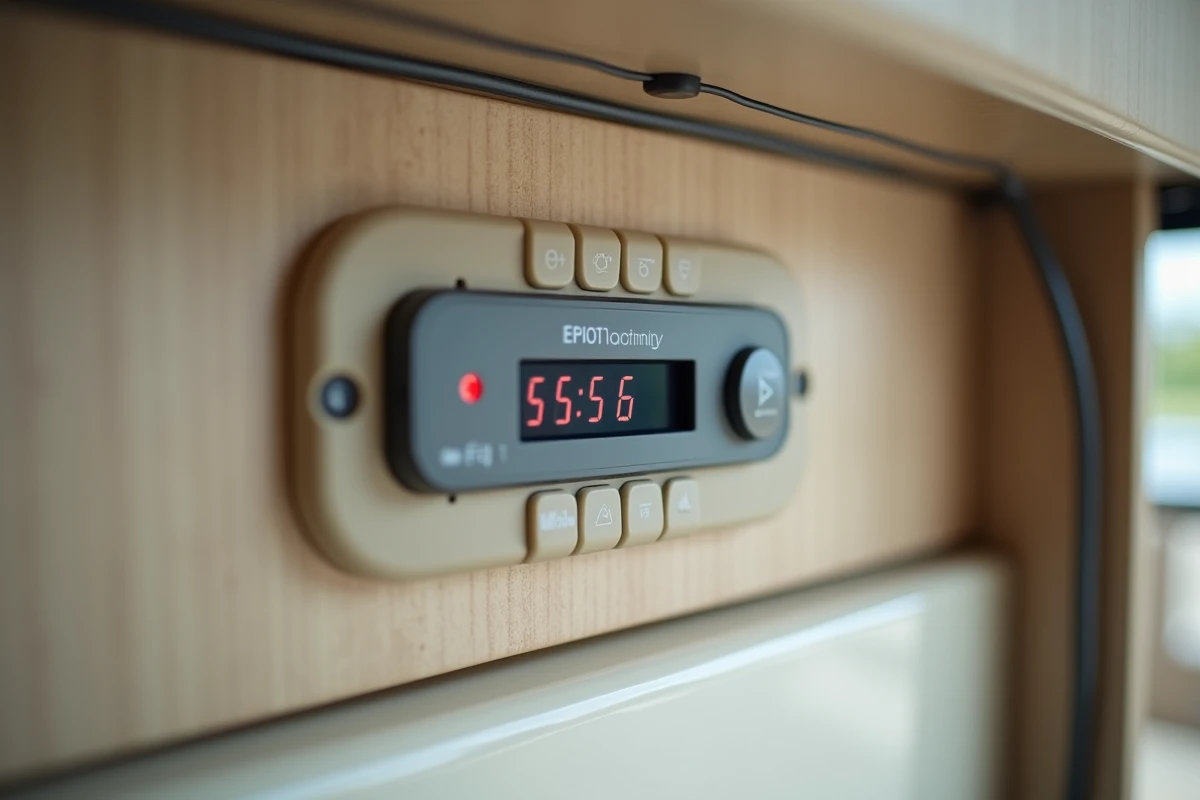
The reset on a rotary CP Plus panel is done by cutting the power to the device for about ten seconds, then turning it back on. On an iNet X panel, the reset goes through the system menu. These procedures are only effective on W codes.
A repeated reset on an E code without correcting the underlying cause can worsen the situation. The lockout exists to protect the user: forcing it is akin to disabling a gas safety device.
Truma online diagnostic tool
Truma offers an official diagnostic tool that filters codes by model (Combi 4, Combi 6, Combi 6E, VarioHeat) and by energy type (gas, diesel, electric). This tool precisely indicates which actions are authorized for the user and from what point professional customer service intervention is mandatory. Static lists from blogs do not replace this dynamic filtering by model, as the same code number can correspond to different causes depending on the device.
When a Truma error code requires professional customer service intervention
The rule is simple: any E code, any W code that reappears after two consecutive resets, and any code accompanied by a smell of gas or abnormal smoke require professional diagnosis. The EN 1949 and EN 624 standards strictly regulate interventions on gas circuits of recreational vehicles. Touching a gas connection without authorization puts your liability at risk in case of an incident.
Codes related to temperature sensors (EOS, BOS) or the ionization electrode fall under the same principle: replacing these components requires access to the burner and a post-intervention leak check that only a properly equipped workshop can perform correctly.
A well-conducted diagnosis always starts with reading the prefix, checking the obvious causes (gas, voltage, ventilation), and then consulting the Truma tool filtered by model. Any other approach wastes time and risks turning a benign code into an aggravated fault.