The choice of a wedding dress relies on technical considerations that fittings alone cannot resolve. Understanding the construction of a bodice, the behavior of a fabric on a given silhouette, and the time constraints of a workshop helps avoid late disappointments. Here are the points we recommend examining before even making an appointment.
Bodice construction and boning: what holds a wedding dress together
A well-constructed bodice determines comfort throughout the duration of the reception. Steel spiral boning offers superior support compared to heat-bonded plastic, which is common in entry-level models. The difference is felt after several hours: soft boning moves with the bust without creating pressure points.
The inner lining determines both the drape and comfort. A bodice lined with cotton or natural silk regulates perspiration better than standard polyester. On a strapless bodice, we observe that integrated silicone grip along the neckline reduces the need for excessive alterations at the darts.
Specialized workshops offer fittings on muslin (a prototype in neutral fabric) before cutting the final fabric. This step, often absent from ready-to-wear bridal circuits, reveals necessary adjustments on the neckline, curvature, and waistline. The designers listed on https://www.perlemaisondemariee.fr/ work according to this process, which limits unpleasant surprises during final alterations.
Fabric and silhouette: adapting the material to the dress cut
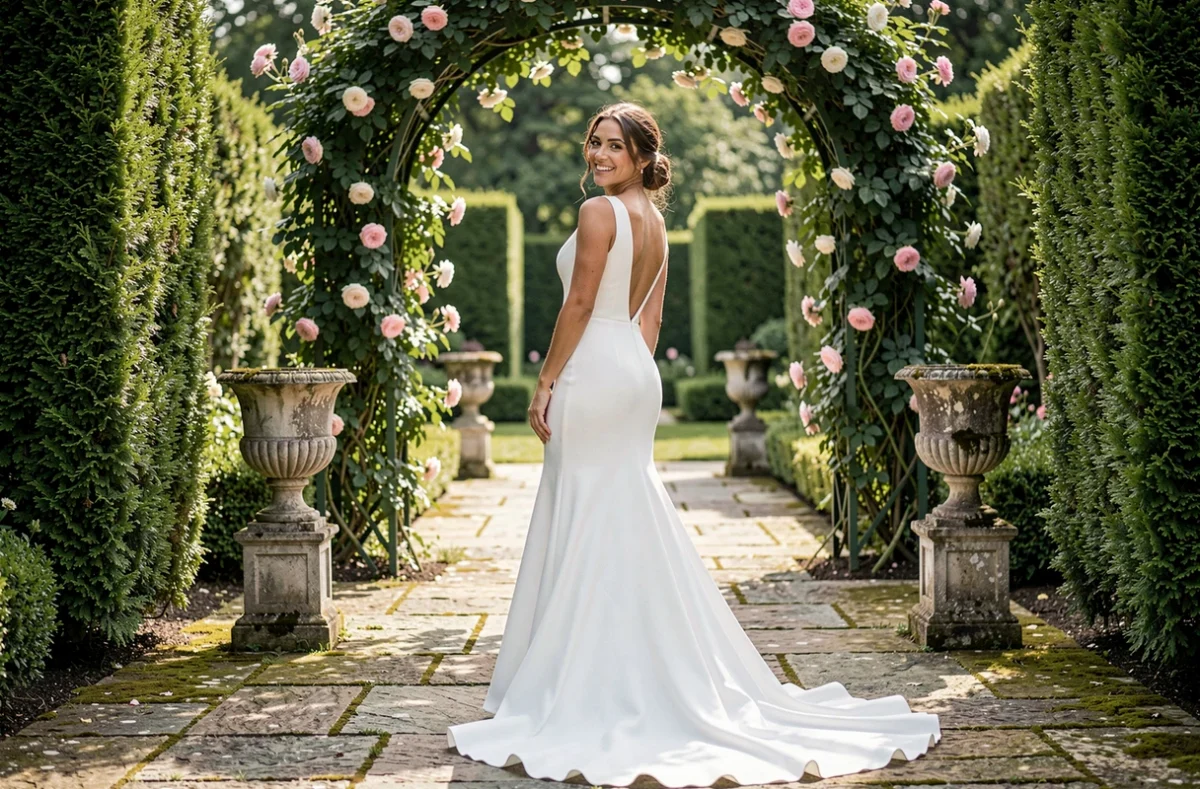
The behavior of a fabric changes radically depending on the chosen cut. An A-line in mikado (stiff double-faced satin) produces a graphic and structured silhouette, while the same cut in silk crepe gives a fluid effect that hugs the body more closely. The weight of the fabric directly influences the drape and freedom of movement.
For mermaid or sheath silhouettes, stretch crepe remains the most reliable choice: it hugs curves without marking underwear seams. Calais or Chantilly lace, placed over illusion tulle, works better in layering than as the main fabric, unless the model incorporates sufficient internal structure.
Fabrics and seasons
An outdoor summer wedding does not fare well with heavy satins or heavily starched organzas. In this case, we recommend silk chiffon or soft tulle, which tolerate heat without sagging. For a winter wedding, silk velvet or brocade provides a visual density consistent with the season.
- Silk crepe: matte drape, wrinkle-resistant, suitable for fitted cuts and hourglass or rectangle body shapes
- Mikado: rigid hold, ideal for voluminous princess-style skirts or structured A-lines
- Silk tulle: maximum lightness, possible layering in multiple layers without weighing down the silhouette
- Embroidered lace: raised patterns with silk thread, best used on a bodice or sleeves rather than in a full skirt
Sustainable wedding dress: rental, second-hand, and eco-design
The rental and resale of wedding dresses are no longer fallback solutions. Recent data shows a notable growth in these alternatives, driven by expectations of simplicity and sustainability among couples. The second-hand bridal market is becoming structured with dedicated platforms and specialized consignment shops.
Eco-design is also progressing among designers. Some prioritize certified fabrics (European linen, silk from traceable sources) and limit waste through optimized patterns. Choosing a sustainable dress does not imply aesthetic compromise: luxury minimalism, with clean lines and noble materials, is emerging as a strong direction in recent collections.

For a bride considering resale, a model in solid fabric without glued embellishments (heat-bonded rhinestones, plastic applications) retains its value better. Hand embroidery and sewn lace withstand repeated cleanings, unlike heat-fixed elements.
Alterations and timelines: planning the custom wedding dress
Custom work requires a strict timeline. Between the first consultation and final delivery, several months of production should be expected depending on the complexity of the model. Ordering at least ten months before the wedding avoids any compression of alteration timelines.
Alterations are not limited to a hem. Adjusting a bodice may require redoing the bust darts, modifying the back neckline, and repositioning the boning. On a lace dress, each modification requires pattern matching work, which extends workshop time.
- First consultation and model selection: taking complete measurements (bust, waist, hips, sitting height, back length)
- Fitting on muslin: validating the cut before cutting the final fabric
- First fitting in final fabric: checking the drape, adjusting volumes
- Final fitting: precision alterations, adding final embellishments, checking comfort in a seated position
Alterations on ready-to-wear bridal
Even a dress bought off the rack almost always requires alterations. Plan for two to three appointments with a seamstress specialized in weddings. A general seamstress may lack experience with delicate fabrics or boned constructions.
The final fitting should be done with the shoes for the big day and the final undergarments. A change in heel height, even slight, alters the hemline and can affect the drape of a train. This detail, often overlooked, leads to last-minute corrections that are perfectly avoidable.