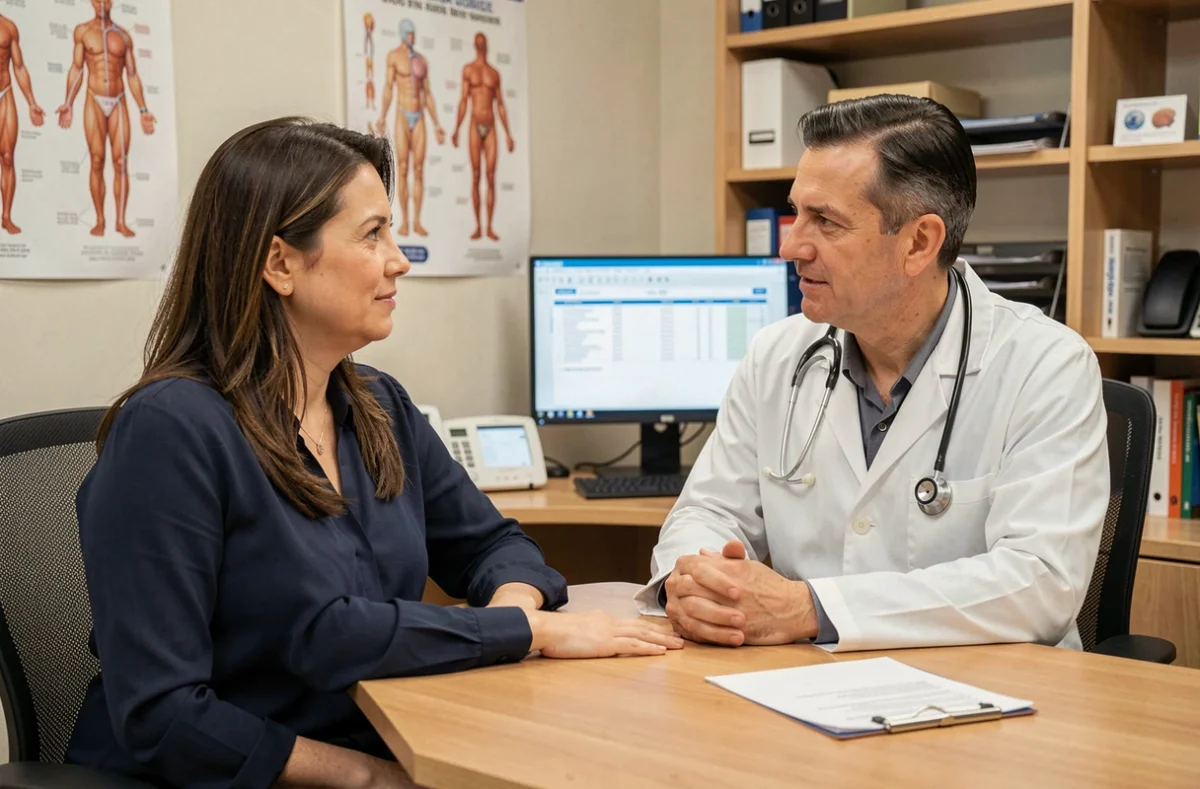
Finding a reliable healthcare professional near you relies on the ability to verify official data, not just on geographical proximity. Online directories, national registries, and local indicators provide concrete ways to cross-check information before making an appointment.
Verify a practitioner’s identity with the RPPS
The shared directory of healthcare professionals (RPPS) serves as the central national registry for verifying a professional’s identity. Since October 2024, the former ADELI registry has been fully integrated into the RPPS. Therefore, any search for reliability starts with this database.
Registration in the RPPS is comprehensive and mandatory for regulated professions with an order (doctors, dental surgeons, pharmacists, midwives, nurses, physiotherapists). For other professions, registration goes through the RPPS+ system and remains non-exhaustive.
One key point to remember: the absence of a practitioner in the official directory does not prove illegal practice. Before drawing a conclusion, check the regulatory status of their profession. If in doubt, contact the relevant professional organization directly (order or ARS).
You can discover professionals on Guide de Santé to complement this initial verification with detailed profiles by specialty and location.
Localized potential accessibility: going beyond the distance criterion

The common reflex is to look for the nearest practitioner. This approach has a serious limitation: distance says nothing about the actual availability of slots or the patient load of the practice.
The DREES publishes an indicator called localized potential accessibility (APL). This indicator cross-references the number of professionals in an area, their activity, and the population that seeks their services. It provides a much more accurate picture than mere distance.
Data from 2024 show differentiated trends according to professions:
- The average accessibility to general practitioners and nurses has slightly decreased in the recent period.
- Accessibility to physiotherapists, midwives, and dental surgeons has improved.
- Two neighboring municipalities can have very different APL scores, depending on the distribution of practices and population density.
Consulting the APL of your municipality before starting a search helps guide your efforts. If the score is low for a specialty, broadening the geographical scope or considering teleconsultation becomes a more rational strategy than making multiple calls.
Concrete criteria for assessing the reliability of a healthcare professional
Once the practitioner is identified in a directory, several elements allow you to judge their reliability even before the first consultation. Convention status is the first discriminating filter.
A contracted professional in sector 1 applies the rates of the Health Insurance without exceeding them. A professional in sector 2 charges free fees. This distinction affects financial coverage and should be indicated on their directory profile.
Beyond the fee, other criteria deserve attention:
- The exact specialty practiced, which must correspond to your needs (a rheumatologist and an orthopedist do not treat the same pathologies).
- The physical accessibility of the practice, especially for people with reduced mobility. A directory dedicated to the accessibility of medical and paramedical practices exists on data.gouv.fr.
- The possibility of making online appointments, which indirectly informs about the actual availability of slots.
- Potential affiliation with a territorial professional health community (CPTS), a sign of coordination with other professionals in the area.
The role of the primary care physician in coordinated care pathways

The primary care physician remains the main entry point in the care pathway. They know the medical history, ongoing treatments, and refer to an appropriate specialist. Consulting a specialist without going through the primary care physician reduces reimbursement for most specialties.
Some professions remain accessible directly: ophthalmologists (for renewing glasses or glaucoma screening), gynecologists, psychiatrists (for patients under 26), and stomatologists. Midwives, nurses, and physiotherapists can also be consulted without prior referral within their scope of practice.
For individuals without a primary care physician, the situation becomes more complicated. DREES data confirms a slight decrease in accessibility for general practitioners. In this case, contacting the local Health Insurance fund or the conciliator of the organization remains a possible step to obtain guidance assistance.
Health directory and official data: what these tools cover and what they do not
The Health Directory, which aggregates data from the RPPS and the FINESS registry, lists healthcare professionals and establishments in France. Each profile displays the address, phone number, specialties, and convention status.
This data confirms that a professional exists legally and practices within a regulated framework. However, no official directory measures the quality of services or actual waiting times. Patient reviews published on third-party platforms are also not integrated into public registries.
To complement the information, My Health Space allows for the centralization of medical documents (prescriptions, test results, reports). Healthcare professionals can directly upload these documents, facilitating follow-up between different practitioners and avoiding the loss of information when changing doctors.
The reliability of a healthcare professional is built through cross-checking: presence in the RPPS, verified convention status, APL score of the municipality, and effective coordination with the primary care physician. No single tool provides all the answers, but cross-referencing two or three official sources is enough to rule out questionable situations.