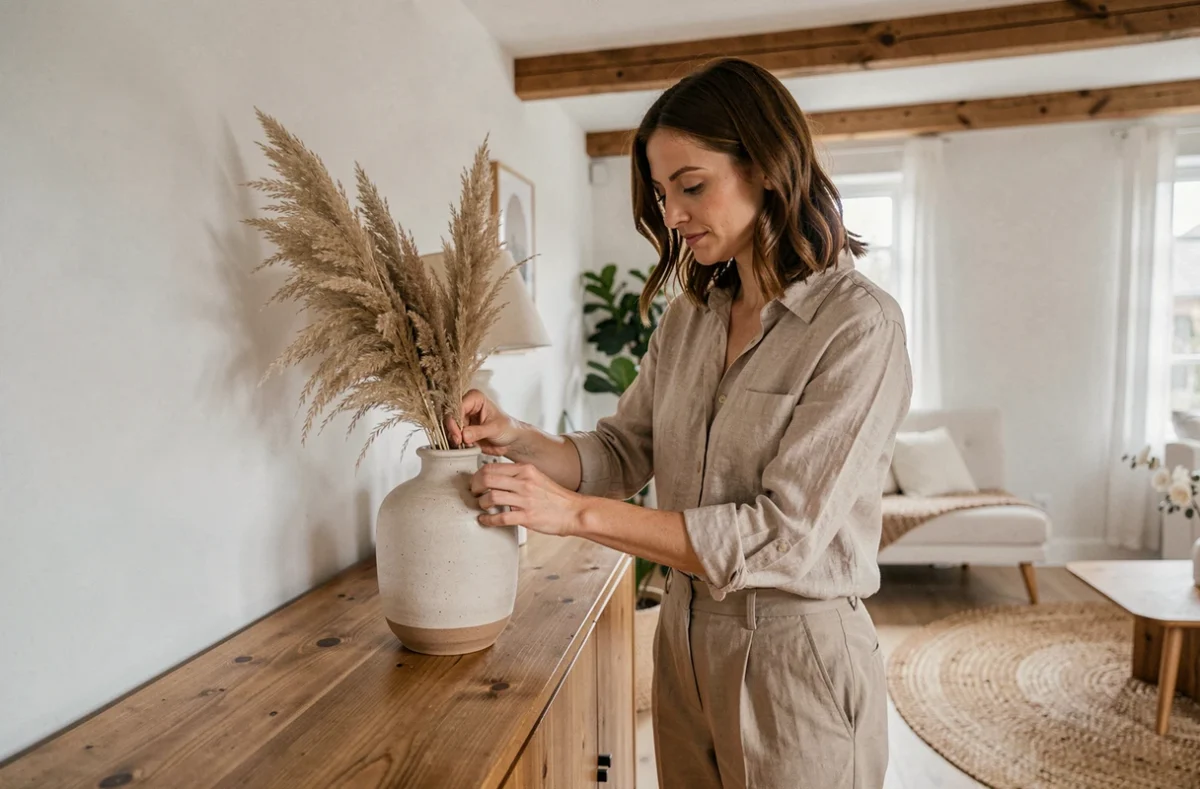
A living room wall that gets tired after two years, a thrifted piece of furniture that never finds its place, a harsh light in the evening: we all know these everyday irritants that eventually weigh on the atmosphere of an interior. Transforming your space doesn’t necessarily require major renovations. A few targeted interventions, chosen based on the room and its real constraints, are often enough to radically change the perception of a place.
Panoramic wallpaper and plant decor: the wall that changes the whole room
Rather than repainting four walls in a trendy color that will quickly become tiresome, it’s better to focus the effort on a single wall. Panoramic wallpapers with foliage patterns are seeing a notable increase in searches in France. This type of wall decor transforms a living room or bedroom by creating a visual depth that uniform paint does not produce.
Specifically, choose the most visible wall from the entrance of the room. A plant-themed panoramic wallpaper works best on a clear surface, without multiple outlets or an imposing radiator. The accent wall should remain the only strong element in the room: if the sofa is already very colorful or if the curtains have busy patterns, the result may end up overwhelming the space instead of enlarging it.
For those who are unsure about the pattern, palettes inspired by nature (ferns, palms, autumn foliage) integrate more easily with existing furniture than a highly contrasting geometric pattern. Feedback varies on the durability of non-woven wallpapers depending on the brands, but careful gluing of the wall (and not the strip) remains the most reliable method to avoid premature peeling.
You can find inspiration and references for interior decoration on miragedinterieur.fr, particularly for combining wall coverings and furniture in a coherent style.
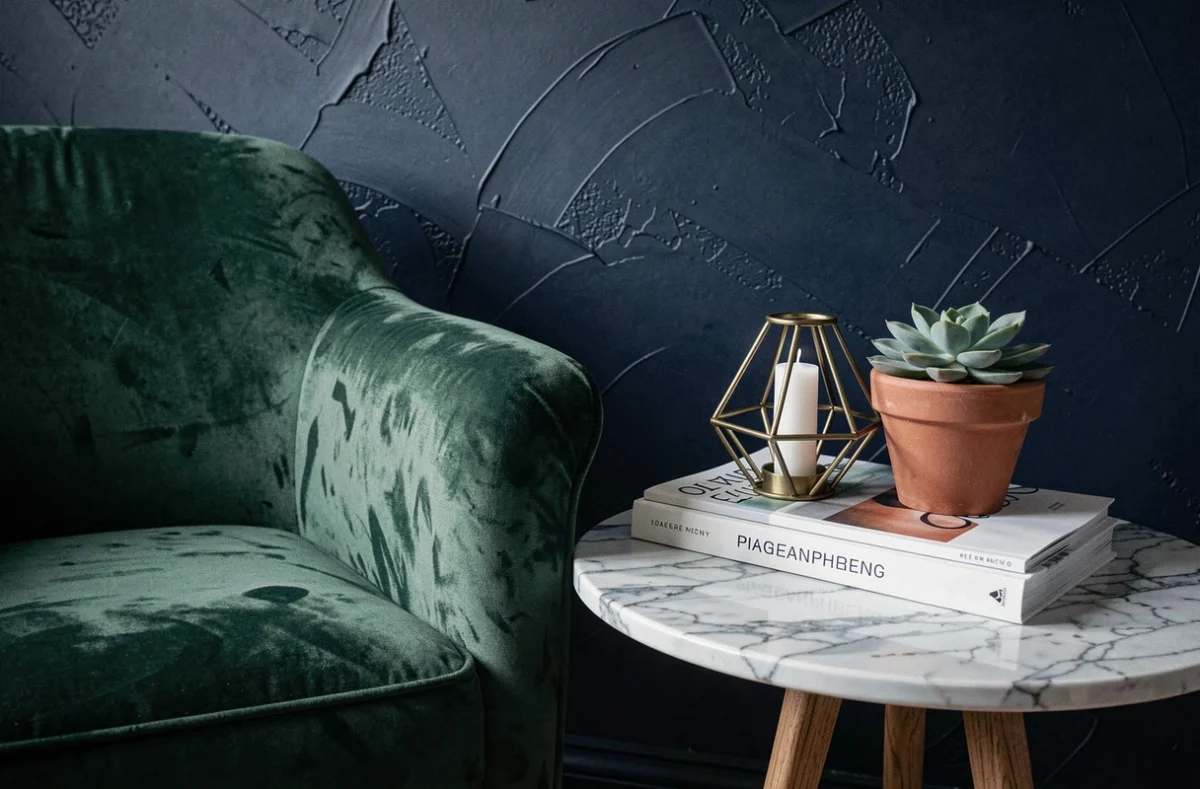
Vintage furniture in interior decoration: beyond the trend
The integration of antique pieces into a contemporary interior is no longer a niche choice. According to the Designer Trends Survey 2026, conducted among 468 interior designers worldwide, 85% of respondents had incorporated at least one vintage piece into a client project completed in 2025. Vintage furniture and antiques represented an average of 36% of the prescribed items.
Vintage works when it interacts with the rest of the furniture, not when it is placed like a museum object in the middle of a neutral decor. A 1960s teak sideboard pairs well with a contemporary black metal table, provided they share a common line (tapered legs, thin top). In contrast, a tufted armchair next to an ultra-minimalist Scandinavian sofa rarely creates the desired effect.
Here are some concrete guidelines for integrating vintage without missing the mark:
- Limit antique pieces to two or three per room to avoid a flea market effect.
- Harmonize the woods: if the flooring leans towards light oak, a very dark walnut piece requires a linking element (a rug, a cushion in an intermediate tone).
- Restore finishes without altering: lightly sanding a yellowed varnish and applying a colorless oil often suffices to modernize a piece without erasing its patina.
- Test the sturdiness before purchase, especially for chairs and seats: a creaky structure signals an expensive repair.
Light and textiles: two underestimated levers to transform a living room
We often think of furniture and wall color, but artificial light defines the ambiance more than any other element. A single ceiling light in the center of the living room flattens the volumes and creates unflattering shadow areas. The most effective solution is to multiply light sources at different heights.

An arc floor lamp near the sofa, a table lamp on an accent piece, an indirect LED strip behind a TV unit: three light points are enough to restructure a living space. Warm color temperatures (around 2,700 K) are preferred for relaxation areas, and more neutral tones for a workspace or kitchen.
On the textiles side, the quickest and least expensive change comes from cushions, throws, and curtains. Replacing thin curtains with thick linen ones alters the acoustics and thermal perception of a room. Mixed patterns work as long as they share a common color: a terracotta striped cushion pairs well with a solid throw in the same range, even if the textures differ.
Social media and decoration: sorting inspiration before buying
Interior decoration is increasingly shaped by social platforms. Pinterest remains a massive source of inspiration, but pinned images never show the real constraints of a space: the size of the hallway, the ceiling height, the available natural light. You often end up with an impulsive purchase that doesn’t work in the actual context of the room.
A more reliable method is to create an inspiration board limited to a maximum of ten images, then identify the three common elements (a dominant color, a type of material, a proportion of furniture). It is this constant that defines the desired style, not the accumulation of disparate references.
The trend of “performative” interiors, designed to be photographed rather than lived in, sometimes leads to impractical choices in daily life. A white velvet sofa looks stunning on a feed, but in a living room with children or pets, its aesthetic lifespan is measured in weeks. Choosing materials suited to your actual lifestyle remains the most useful filter before any decorative purchase.
A successful interior is not one that replicates a catalog. It is one where each element, from wallpaper to lighting to thrifted armchair, serves a concrete purpose and stands the test of time. The best decor investment often remains the time spent observing how we actually live in each room before making any changes.