
A block of meat taken out of the freezer looks like a stone slab. The blade of a standard knife slips or twists, fingers grip the handle tightly, and the risk of injury rises with each attempt. Cutting frozen meat presents a specific mechanical problem: the cold-hardened flesh offers resistance comparable to that of hardwood, which requires suitable tools and techniques.
Why a standard knife breaks or slips on frozen meat
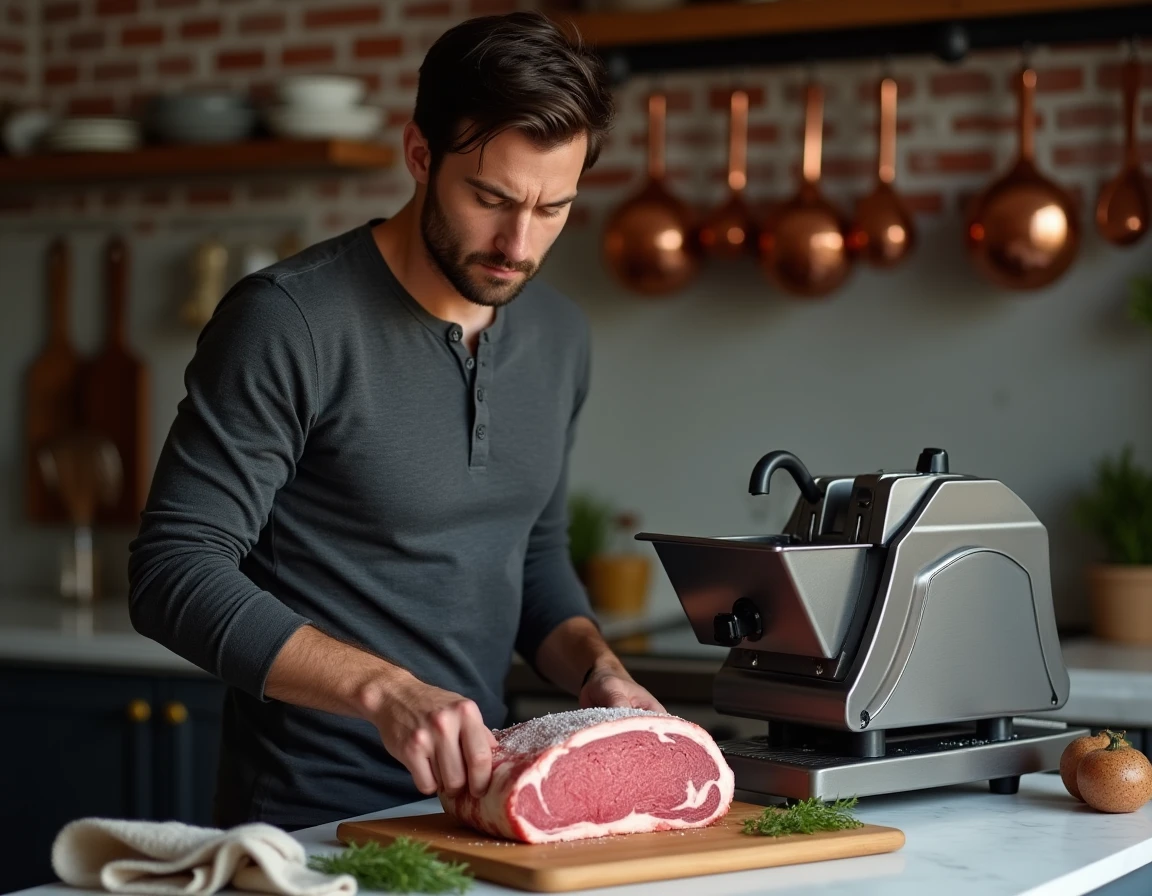
Freezing transforms the water contained in muscle fibers into ice crystals. These crystals stiffen the internal structure of the meat and create an extremely hard surface. A standard kitchen knife, even well-sharpened, is not designed to confront this type of resistance.
The edge of a smooth blade dulls almost immediately upon contact with a frozen block. On a thin blade (like a sole fillet or boning knife), lateral flexing can cause a clean break. Hard steel blades, such as Japanese types, which are very sharp but fragile, are the most exposed to this risk.
The real danger comes from slipping. The icy surface offers little grip, and the force needed to push the blade through is much greater than that of a standard cut. The knife can suddenly slip towards the hand holding the block. To easily cut frozen meat, you must first choose a tool whose serration or mechanism compensates for this hardness.
Frozen meat knife, electric knife, or compact saw: which tool for which block
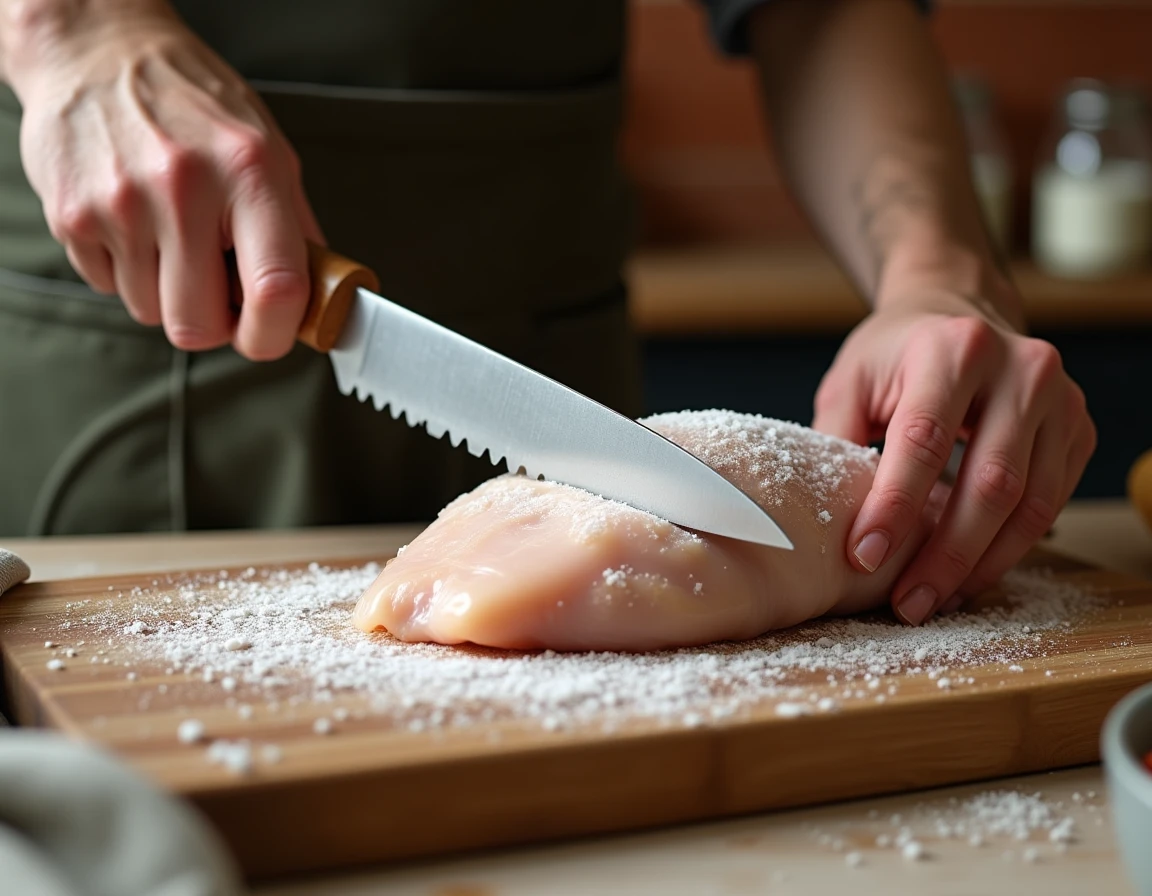
Three categories of tools stand out, and their relevance directly depends on the size of the piece to be cut.
The serrated frozen meat knife
This is the basic tool. Its thick, rigid, and heavily serrated blade allows it to bite into the frozen surface without slipping. The useful length typically ranges from 20 to 30 cm. An ergonomic, non-slip handle is crucial, as the force exerted on a hard block is fully transmitted to the palm.
This knife works well on individual portions or medium-sized pieces. On a compact block weighing several kilos, progress remains slow and tiring, even with good sawing technique.
The electric knife with interchangeable blades
In recent years, manufacturers like Bosch or Severin have marketed electric knives explicitly designed for use on frozen meat. These devices feature interchangeable serrated blades designed for very hard textures, with safety systems (lock, double trigger) that limit accidental starts.
The reciprocating motion of the two blades does the sawing work for you, significantly reducing wrist fatigue. However, the cut remains less precise than with a manual knife: the edges are slightly frayed, which doesn’t matter if the meat is intended for cooking.
The mini electric kitchen saw
For large blocks (over five kilos), a compact battery or corded saw is the fastest option. These models, which appeared massively on the market from 2022-2023, follow the principle of a reciprocating saw with food-grade stainless steel blades.
The mini-saw is the only tool truly effective on a ten-kilo block. A knife, even electric, would require disproportionate time and effort on this volume. The entry price remains moderate, comparable to that of a good electric knife.
Cutting technique on frozen meat: the gestures that make all the difference
The tool is not everything. The way to stabilize the block and orient the cut determines the safety and clarity of the result.
- Take the block out of the freezer five to ten minutes before cutting. This very short time is not enough to thaw the meat, but the surface loses just enough frost for the blade to grip from the first few millimeters.
- Place the block on a non-slip cutting board. Models with silicone feet and integrated grooves (offered by brands like Zwilling or Joseph Joseph) prevent slipping and catch micro-ice chips.
- Use a steady sawing motion without applying too much pressure. Excessive pressure is the primary cause of slipping. Let the serration do the work by making long, steady back-and-forth motions.
- If the block is very thick, first trace a groove along the entire cutting line before gradually deepening it. This groove guides the blade and prevents it from veering off.
Hygiene precautions and limits of refreezing
Cutting a frozen block poses no health issues as long as the meat remains at a negative temperature throughout the operation. The few minutes of cutting are not enough to initiate a significant temperature rise within the mass of the product.
Cut portions that will not be cooked immediately can return to the freezer if they remain hard to the touch. Meat that has begun to soften on the surface should not be refrozen without prior cooking, as the thawed area may have reached a temperature favorable to bacterial growth.
A often overlooked point: the cutting board and knife used on frozen meat accumulate icy juice that, when melting, can contaminate surfaces. Clean the board and blade immediately after cutting, without waiting for everything to melt.
Freezing in individual portions to avoid cutting
The best way to avoid struggling with a frozen block is to never create one. If you buy fresh meat in bulk packaging, divide it into portions suitable for a meal before placing it in the freezer. Flat freezer bags (in a thin layer) allow for quick freezing and even thawing.
For those who buy frozen blocks of several kilos directly, cutting upon receipt (when the block is still partially soft after transport) avoids having to pull out the saw three weeks later. Fifteen minutes of preparation at the time of purchase saves hours of hassle in the kitchen.