The world of antique dealers is often filled with mystery and intrigue, as one must delve into the past to understand the history of each object. This is particularly true for old glass bottles, whose dating and knowledge of origin require specific skills. It is not enough to look at a bottle to know when it was made or where it comes from. One must be able to recognize the marks of time, understand manufacturing techniques, and sometimes even decipher cryptic codes. Here are some tips to help you date a glass bottle and uncover its captivating history.
Visual Clues: Deciphering Old Bottles
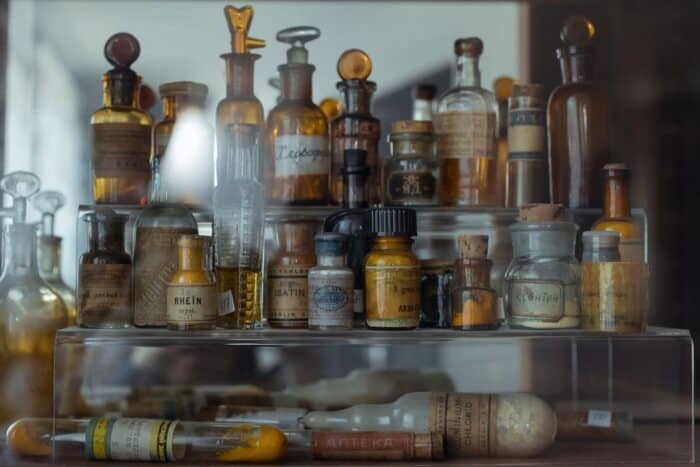
When examining an old glass bottle, the marks and labels can provide valuable clues to determine its age and provenance. Manufacturers of the time often placed discreet marks or distinctive symbols on their creations, which were sometimes difficult to spot at first glance. A magnifying glass can be useful to closely inspect the surface of the bottle for these subtle signals.
Labels, on the other hand, are often a key indicator of a glass bottle’s history. They typically bear the name of the producer, as well as other information such as the location of the distillery or the exact contents of the bottle. By examining these elements, it is possible to establish an approximate period during which this bottle was marketed.
It is important to keep in mind that some labels may be counterfeit: some unscrupulous collectors do not hesitate to recreate vintage labels in order to artificially inflate the value of an old glass bottle when they seek to sell them. All elements must be considered, and one should not rely solely on apparent marks.
It should be noted that there are different methods for applying a mark or label to an old glass bottle. For example, before the advent of modern techniques such as decalcomania (a process of transferring a design from a paper medium to a surface) or self-adhesive labels, some manufacturers used more primitive techniques such as direct engraving on glass or even the use of ink stamps. These different methods can provide additional clues for determining the age of a bottle.
When looking to date an old glass bottle and learn its history, one should not rely solely on these visual elements: a holistic approach that combines visual clues with historical research and scientific dating techniques will provide a more accurate insight into the fascinating history behind each antique object. Keeping these tips in mind, you will be able to uncover some hidden secrets within these precious relics of the past.
Marks and Labels: Keys to Identifying Collectible Bottles
When it comes to dating a glass bottle and discovering its history, historical research plays an essential role. By diving into archives, it is possible to trace the producer’s journey, learn more about the era, and even uncover fascinating anecdotes related to the bottle itself.
The first step often involves identifying the manufacturer or distillery responsible for creating the bottle. Commercial records, professional directories, and old catalogs can be valuable sources for finding this information. These documents often provide details about the producer’s activities over time, which will help refine the dating.
Another interesting avenue is that of contemporary advertisements. By consulting newspapers or magazines from the time, it is sometimes possible to come across an ad featuring precisely that famous glass bottle. The promotional messages used in these advertisements can provide additional insights into the intended use or specific attributes of the bottle.
Publications specialized in the wine or brewing industry are also a goldmine of information for tracing back in time. Technical articles, taste analyses, or product reviews are all clues that not only help situate the chronological period during which this bottle was produced but also potentially its reputation among the public.
In addition to traditional documentary research, it is also possible today to use the Internet as a powerful tool to uncover the mysteries surrounding an old glass bottle. Specialized forums, auction sites, or online databases can provide interesting clues about the provenance and history of the bottle.
You should cross-reference information and consult multiple reliable sources to avoid any potential confusion or errors.
If no historical information is available regarding a specific bottle, there is always the option to consult experts in the field. They often possess in-depth knowledge of the antique market and can provide their expertise to determine the origin and approximate period of a glass bottle.
When seeking to date a glass bottle and discover its history, do not underestimate the power of historical research. By combining these investigations with the visual elements present on the bottle itself, you will increase your chances of tracing the fascinating journey that brought this relic of the past into your amazed hands.
Historical Research: Tracing the History of Old Bottles
In the quest to date a glass bottle accurately, scientific dating techniques provide a wealth of answers. These methods leverage key scientific fields such as archaeology, chemistry, and even DNA analysis.
One popular method is carbon-14 dating. This technique is based on the principle that all living beings absorb radioactive carbon during their existence. Once dead, this absorption ceases, and the level of carbon-14 in their tissues begins to gradually decrease. By analyzing the sample taken from a glass bottle, it should be noted that these methods may require specialized equipment as well as access to appropriate laboratories. Therefore, if you are looking to explore this exciting avenue for conclusive results, it is recommended to consult experts or institutions specialized in the field.
Scientific Dating: Accurate Methods for Dating Bottles
There are many tips for estimating the value of a glass bottle and thus better understanding its history. Here are some suggestions that will help you in this delicate task.
It is essential to take into account the overall condition of the bottle. Collectors place great importance on the condition of the glass, particularly the absence of cracks or chips. A bottle in perfect condition will obviously be worth more than a damaged one.
Take the time to observe the details present on the bottle. The markings, inscriptions, or logos can reveal valuable information regarding its origin and provenance. For example, a famous signature or a rare logo can significantly increase the value of your bottle.
Do not hesitate to consult specialized works to learn about the different existing models and their current market value. These guides often provide indications on the characteristics specific to different eras and artistic styles associated with glass bottles.
Estimating the Value of Bottles: Tips for Collectors
Glass bottles are fragile objects that require meticulous conservation to preserve their original condition. Here are some wise tips for keeping your precious glass bottles in the best conditions.
Be sure to handle the bottles carefully to minimize any risk of breakage or damage. Use clean, dry cotton gloves to avoid any grease or moisture marks on the surface of the glass. Handle them by the neck rather than the body of the bottle, which will reduce the risk of breakage.
To protect your bottles from direct sunlight, choose a space shielded from UV rays. Intense light can alter the color and degrade the label over time. If you decide to display your bottles in a showcase, ensure it is equipped with a UV protective film.
Temperature also plays a crucial role in the preservation of glass bottles. Avoid extreme temperature fluctuations that can lead to rapid expansion or contraction of the glass, potentially causing cracks. A cool, stable room with a temperature between 12°C and 16°C is an ideal environment.
Regarding ambient humidity, keep it under control as it can promote the development of harmful mold that can irreparably damage labels or alter the contents of the bottle. A relative humidity level between 50% and 70% is recommended to preserve the integrity of the glass.
Consider storing your bottles horizontally rather than vertically. This method will ensure constant moisture contact with the cork, preventing it from drying out or crumbling.
By following these valuable tips, you will be able to keep your glass bottles in optimal condition, thus preserving their history and value over the years. Remember that proper conservation is essential if you wish to pass your collection intact to future generations.
Preserving Glass Bottles: Tips for Maintaining Their Quality
When looking to date a glass bottle and learn its history, several clues can guide us in this quest for knowledge. Carefully examine the label of the bottle. The information present on it can provide you with valuable indications regarding its provenance and date of manufacture.
The mandatory legal mentions such as the producer’s name, address, or authorization numbers are all elements that help situate the bottle chronologically. Do not hesitate to consult online databases specialized in brand identification to refine your research.
The type of closure used is also an interesting clue for dating a glass bottle. Over time, the techniques and materials used to seal bottles have evolved. For example, if you find a bottle with a mechanical stopper dating from the early 20th century, this may indicate a specific period.
The shape and style of the bottle can also be revealing. Indeed, during different eras, certain styles were popular while others fell out of favor.